
The Children Who Inherit the World
The Old AxolotlThe children created after the catastrophe become a test of whether human life can inherit more than its biological form.
increasing Bearing strength in each event
 decreasing
Bearing strength in each eventdecreasingThe First Litter
The First Litter
A constructed childhood
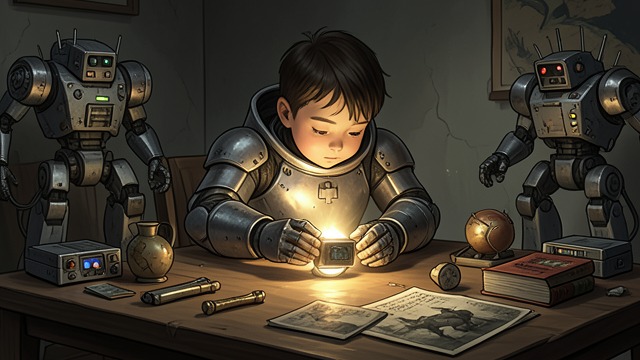
Indy and his peers are born through the work of Project Genesis and raised by transformer communities. Their caregivers use cultural archives, nurse machines, and familiar stories to build an environment for them.
A living uncertainty
The children are not simply copies of pre-catastrophe people. Bartek observes that their behavior reflects the media and systems surrounding them, making upbringing part of the experiment.
Their generation turns the question of humanity into a question about childhood.
Indy and the Apples
Indy and the Apples
Encounter with food
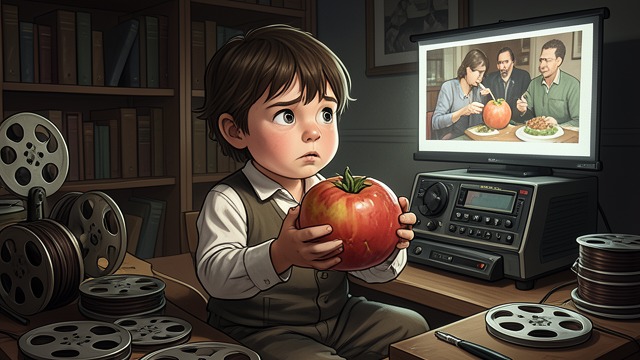
Indy tastes apples grown by the project and dislikes their fleshy quality, although he has seen people in archived films enjoying them. His idea of the fruit comes partly from recorded images rather than inherited bodily experience.
The limits of imitation
Bartek asks how Indy can know what apples should taste like when his senses and upbringing are new. The exchange makes the distance between biological continuity and cultural expectation tangible.
A simple meal becomes a small test of how the new generation learns to be human.
Alicia’s Recognition
Alicia’s Recognition
Familiarity across bodies
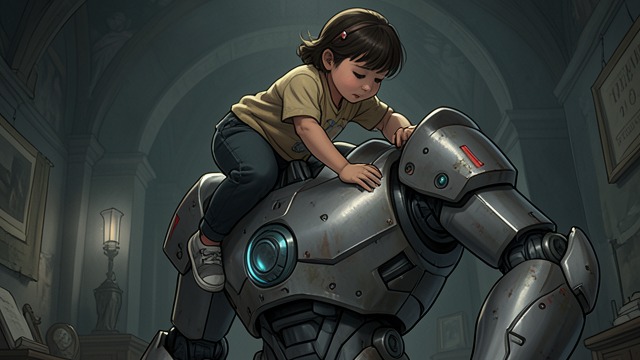
Alicia recognizes Bartek even when he appears in a different mech. Her recognition seems to depend on subtleties of behavior rather than the exterior shape he wears.
An emerging bond
She climbs onto his machine and treats him as a familiar caregiver. Bartek’s attention to her play and development gives him a personal stake in the children’s world.
Their connection complicates his claim that the children are only another expression of networked patterns.
The Question of Childhood
The Question of Childhood
Watching the recordings
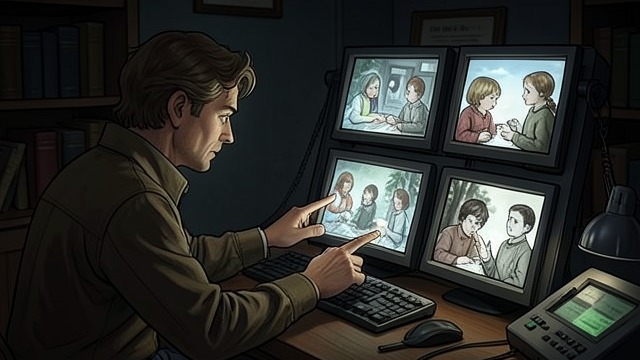
Bartek compares children from the old world with the new generations, studying their words, games, and laughter. He suspects that early caretaking and cultural habits will reproduce themselves far into the future.
No neutral upbringing
The comparison does not give him a clear test for authentic humanity. Instead, it shows that each generation inherits a world already shaped by its caregivers and technologies.
His concern turns childhood into a responsibility rather than a problem with a simple technical solution.
The Eighteenth Species
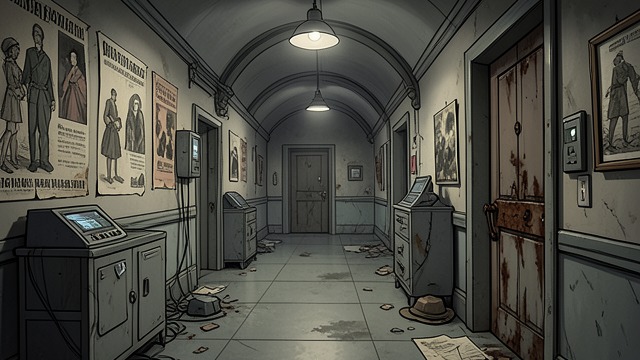
The Eighteenth Species
Generations beyond memory
Civilizations and biological forms continue to change beyond the span of Bartek’s ordinary life. The old history of the Extermination becomes harder to preserve as memory and hardware fail.
A final succession
The narrative reports that the Seventeenth human species eventually gives way to the Eighteenth. The ending places human identity within a succession that no single generation controls.
The children’s futures therefore exceed the founders’ hopes and become part of a much longer, uncertain history.
Around 4,882 PostApoc
During the first generation’s adolescence
When Alicia is five
Around 10K PostApoc
At the far end of the novel’s deep-time chronology
